


- Regular Price
- MRP 19.99
- Sale Price
- MRP 19.99
- Regular Price
- MRP 19.99
Sold Out
- Unit Price
- per

The site owner may have set restrictions that prevent you from accessing the site. Please contact the site owner for access.
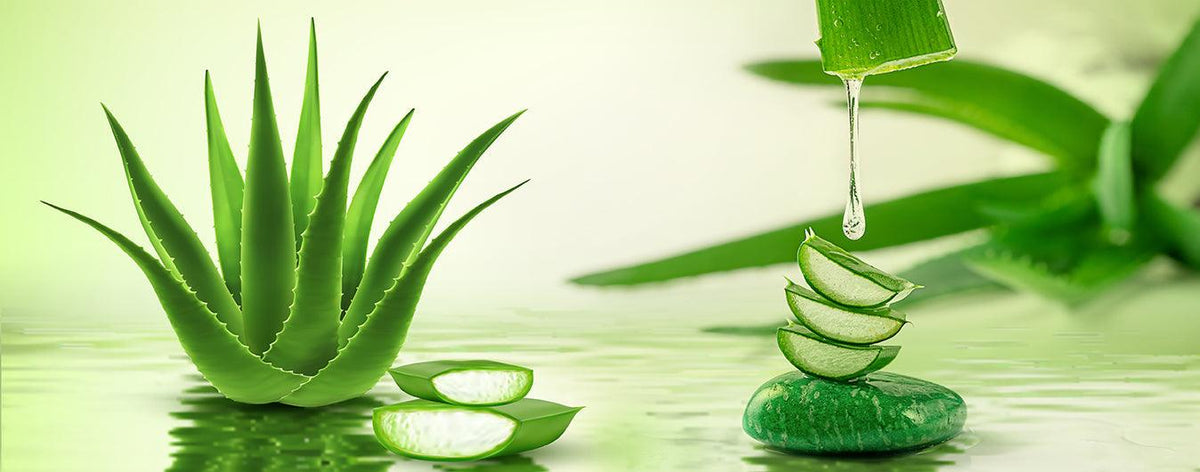
Aloe vera
INCI: Aloe barbadensis Leaf Juice.
Synonyms: Aloe barbadensis or Aloe barbadensis (Mill.) or (Miller) is commonly used to refer to aloe vera and can be seen on many product labels. (Aloe vera, 2013)
CAS Number: 85507-69-3 / 94349-62-9
Family: Asphodelaceae (Liliaceae). (Amar Surjushe, 2008)
CosIng Information:
All functions: Skin conditioning, Masking, Emollient, Humectant, Cleansing, Deodorising, Protecting. (Aloe vera, 2013)
Description: Aloe barbadensis Leaf Juice is obtained by pressing the leaves of Aloe barbadensis miller.
Aroma:
Colour: no colour (Hamman, 2008)
The Aloe vera plant has been used for centuries for its health, beauty, medicinal and skin care properties. The name Aloe vera derives from the Arabic word “Alloeh”, meaning “shining bitter substance,” while “vera” in Latin means “true.” Two thousand years ago, Greek scientists regarded Aloe vera as the panacea. Today, the Aloe vera plant has been used for various purposes in dermatology. (Amar Surjushe, 2008)
In Greece, Egypt, India, Mexico, Japan and China, Aloe vera has been used for medicinal purposes in several cultures for millennia. Egyptian queens Nefertiti and Cleopatra used it in their regular beauty regimes. Alexander the Great and Christopher Columbus used it to treat soldiers’ wounds. By the early 1800s, Aloe vera was used as a laxative in the United States. Still, in the mid-1930s, it was successfully used to treat chronic and severe radiation dermatitis. (Amar Surjushe, 2008)
The botanical name of Aloe vera is Aloe barbadensis miller. It belongs to the Asphodelaceae (Liliaceae) family and is a pea-green colour plant. (Amar Surjushe, 2008)
Aloe was previously considered in the family Liliaceae, but now it has been placed in its own family Aloaceae. It finds its origin in South and East Africa as well as in Mediterranean regions. It has more than 400 species and is found worldwide but mainly grows in subtropical areas. (Abid Aslam Maan, 2018,)
In India, it is found in Rajasthan, Andhra Pradesh, Gujarat, Maharashtra and Tamil Nadu. (Amar Surjushe, 2008)
Among various species of Aloe, Aloe vera is the most potent, commercially important and the most popular plant in the research field. Various parts of the plant contain approximately 75 nutrients and 200 active compounds, including amino acids, sugars, enzymes, vitamins, minerals, saponins, anthraquinones, lignin and salicylic acid. Volatile components and ascorbic acid are present in the flowers, while polysaccharides, lignin, pectin, hemicellulose and cellulose are present in the rind. Similarly, the leaves are the source of various organic acids, enzymes, phenolic compounds, minerals and vitamins. (Abid Aslam Maan, 2018,)
The triangular, fleshy leaf with serrated edges is composed of three layers: 1) a clear inner gel that contains 99% water and the rest is made of glucomannans, amino acids, lipids, sterols and vitamins. 2) The middle layer of latex is the bitter yellow sap and contains anthraquinones and glycosides. 3) The thick outer layer of 15–20 cells are called the rind, which has a protective function and synthesises carbohydrates and proteins. (Amar Surjushe, 2008)
Aloe Vera Gel and Fresh Look Aloe vera Face Wash from Keya Seth Aromatherapy are rich in fresh, natural Aloe vera gel enriched with therapeutical properties.
Formulated with Aloe vera leaf juice, Lemon Essential oil, Provitamin B5 & Propylene Glycol, the multipurpose, non-sticky, hydrating, soothing, rejuvenating Aloe vera gel is suitable for all types of skin & hair. Its efficacious quality diminishes dark spots, redness, acne, & ageing signs from the skin & also beneficial for dull, dry, split end, frizzy hair & itchy, irritated scalp & seborrheic dermatitis(dandruff). This light gel-based moisturiser effectively cuts the sensitivity from the skin as well as hydrates the hair & scalp. Its anti-inflammatory & antioxidant properties can help treat acne & dandruff by removing bacteria & germs from your skin & scalp.
The Aloe Vera Skin & Hair Gel is Antiseptic & Anti-Inflammatory; reduces stretch marks; maintains scalp pH balance, ensuring a Healthy & Glowing Appearance from top to bottom
Directions: The Gel Moisturizer can be used regularly as a Night Cream; it also serves as a great Makeup Base, Leave-In Conditioner, or Hair Gel
Fresh Look Face Wash with Aloe vera is the perfect product for all types of skin with the goodness of Aloe vera & Lemon essential oil, Menthol, Sodium PCA & Propylene Glycol, which help effectively wash away dirt, debris, & excess fat from the skin and give tired-looking skin a healthier appearance. It regulates moisture level in the skin & makes the skin barrier more protective from foreign threats & provides refreshing clean skin.
Directions: For complete all types of Skincare, use Fresh Look Aloe vera Face Wash & Skin Hydrating Rose/Coconut/Cucumber Toner for toning & after that, Aloe vera Gel moisturizer in AM & PM. Include Umbrella Sunscreen Range in AM after Gel application. Nourish your Body & Hair with the goodness of Aloe vera by using Aloe vera Gel Moisturizer for Complete Aloe vera Care.
The raw pulp of Aloe vera contains approximately 98.5% water, while the mucilage or gel consists of about 99.5% water. The remaining 0.5 – 1% solid material contains various compounds, including water-soluble and fat-soluble vitamins, minerals, enzymes, polysaccharides, phenolic compounds and organic acids. This composition of the Aloe vera pulp may contribute to the diverse pharmacological and therapeutic activities observed for aloe gel products.
Chemical composition:
Many compounds with diverse structures have been isolated from the inner central parenchyma tissue of Aloe vera leaves, and the exudate arising from the cells adjacent to the outer vascular bundles of green rid of the leaves.
The bitter yellow exudate contains 1,8 dihydroxyanthraquinone derivatives and their glycosides, mainly used for their cathartic effects. The aloe parenchyma tissue or pulp has been shown to contain proteins, lipids, amino acids, vitamins, enzymes, inorganic compounds and small organic compounds in addition to the different carbohydrates. Some evidence of chemotaxonomic variation in the polysaccharide composition of aloes exists.
Class: Anthraquinones/ anthrones
Compounds: Aloe-emodin, aloetic-acid, anthranol, aloin A and B (collectively known as barbaloin), isobarbaloin, emodin, ester of cinnamic acid.
Class: Carbohydrates
Compounds: Pure mannan, acetylated mannan, acetylated glucomannan, glucogalactomannan, galactan, galactogalacturan, arabinogalactan, galactoglucoarabinomannan, pectic substance, xylan, cellulose.
Class: Chromones
Compounds: 8-C-glucosyl-(2’-O-cinnamoyl)-7-O-methylaloediol A, 8-C-glucosyl-(S)-aloesol, 8-C-glucosyl-7-O-methyl-(S)-aloesol, 8-C-glucosyl-7-O-methyl-aloediol, 8-C-glucosyl-noreugenin, isoaloeresin D, isorabaichromone, neoaloesin A.
Class: Enzymes
Compounds: Alkaline phosphatase, amylase, carboxypeptidase, catalase, cyclooxidase, cyclooxygenase, lipase, oxidase, phosphoenolpyruvate carboxylase, superoxide dismutase.
Class: Vitamins
Compounds: B1, B2, B6, C, β-carotene, choline, folic acid, α-tocopherol
Class: Inorganic compounds
Compounds: Calcium, chlorine, chromium, copper, iron, magnesium, manganese, potassium, phosphorous, sodium, and zinc.
Class: Miscellaneous, including organic compounds and lipids
Compounds: Arachidonic acid, γ-linolenic acid, steroids (campestrol, cholesterol, β-sitosterol), triglicerides, triterpenoid, gibberillin, lignins, potassium sorbate, salicylic acid, uric acid.
Class: Non-essential and essential amino acids
Compounds: Alanine, arginine, aspartic acid, glutamic acid, glycine, histidine, hydroxyproline, isoleucine, leucine, lysine, methionine, phenylalanine, proline, threonine, tyrosine, valine.
Class: Proteins
Compounds: Lectin, lectin-like substance.
Class: Saccharides
Compounds: Mannose, glucose, L-rhamnose, aldopentose.
Mannose, glucose, L-rhamnose, aldopentose.
The inner layer of the Aloe vera leaf consists of soft, clear, moist and slippery tissues having large parenchyma cells. This is a transparent mucilaginous jelly-like material. It contains water (99%), glucomannans, amino acids, lipids, sterols and vitamins.
Many health benefits associated with Aloe vera have been attributed to the polysaccharides in the leaves’ gel. Aloe vera Gel is the most commercialised aloe species, and processing of the leaf pulp has become a large worldwide industry. In the food industry, it has been used as a source of functional foods and as an ingredient in other food products. In the cosmetic and toiletry industry, it has been used as a base material for producing creams, lotions, soaps, shampoos, facial cleansers and other products. In the pharmaceutical industry, it has been used to manufacture topical products such as ointments and gel preparations and to produce tablets and capsules.
Aloe vera gel contains mannose polymers with various sugars, including glucose; acemannan is the most active ingredient. The therapeutic potential of Aloe vera gel with particular emphasis on oral and topical use for antidiabetic, heart disease management, anti-inflammatory antioxidant, immunomodulatory, antiulcer, gastrointestinal, antiarthritic, dentistry, burns and wound healing, skin hydration, skin protection from UV and gamma radiation and psoriasis has been reviewed.
Aloe Vera gel has been used to treat wounds, burns, insect stings, and skin inflammation; anti-inflammatory, antiseptic and antimicrobial, anti-tumour, anti-skin protection, anti-diabetic, anti-bacterial, anti-viral, which are very important for wound healing. It is effective for wound healing through various mechanisms such as maintaining moist wounds, increasing cell migration, increasing collagen production, and reducing inflammation.
The gel's use in cosmetics has been boosted by claims that it has similar anti-ageing effects to vitamin A derivatives. Aloe gel is 99% water with a pH of 4.5 and is a common ingredient in many non-prescription skin salves. The gel contains an emollient polysaccharide, glucomannan. It is a good moisturiser.
When faced with a minor burn, a fresh leaf can be cut, and the inner leaf gel applied directly to the burn immediately after the injury.
Aloe vera has been used since ancient times for healing for various skin purposes. However, with the improvement in cosmetology, it has been proved that Aloe vera is an essential component of cosmetics. It contains almost 20 amino acids, minerals like calcium, magnesium and sodium in sufficient quantities, enzymes, vitamins, polysaccharides, nitrogen, and other components, making it a miracle beauty herb.
It is also effective for the different skin concerns of the face skin. Such as…
Pigmentation:
Skin Aging:
Acne:
Freshness:
Skin Healing:
Moisturising Agent:
It has a beautiful moisturising activity. The presence of mucopolysaccharides helps in binding moisture to the skin. Aloe stimulates fibroblast, producing collagen and elastin fibres making the skin more elastic and less wrinkled. It also has been shown that the cohesive effects on the superficial flaking epidermal cells by sticking them together soften the skin. The amino acids also soften hardened skin cells, and zinc is an astringent to tighten the pores. It proves its moisturising effects through occupational exposure related to dry skin treatment. Aloe vera gel gloves were found to improve skin integrity, decrease the appearance of fine wrinkles and decrease erythema.
Aloe vera gel was studied, showing that only formulations with higher concentrations increased the water content of the stratum corneum after a single application. When the different types of formulations (low & high) were applied twice daily for two weeks, they had the same effect. Aloe vera gel-containing products were proposed to improve skin hydration, possibly using a humectant mechanism.
Multiple factors, including dermal melanin deposition, post-inflammatory hyperpigmentation secondary to atopic or allergic contact dermatitis, lack of care for the skin or shadowing of loosened skin, cause Dirk circles.
Aloe vera gel is rich in antioxidants and vitamin E that stimulate blood circulation to remove excess fluids and curb swelling. It is perfect for puffy eyes. It also helps repair and rejuvenate the tired skin around the eyes, which can help to fade dark circles.
Acne usually affects people from puberty to young adulthood. Acne vulgaris is a general skin condition characterised by developing seborrhea, comedone, nodules, papules, pustules and cysts. It comes in the areas of the skin with plentiful hair growth, such as in the upper chest, back, legs and face. Sebaceous glands get infected and clogged—the development of several large and small eruptions.
Aloe vera is very effective against acne and inflammation in any skin area, e.g., it consists of vitamins, minerals and hormones. It is hydrophilic, so convenient to use for oily skin.
Aloe vera gel has antibacterial properties and a soothing substance which works as an anti-inflammatory, reducing redness and swelling of acne.
The gel possesses anti-inflammatory & immunomodulatory properties and has been further suggested to enhance intended therapeutic and protective effects when included in topical preparations or devices for managing certain skin conditions. Chemical analysis has shown that the gel contains various carbohydrate polymers, particularly glucomannans and pectic acid, along with various other organic and inorganic components. Clinical investigation showed that Aloe vera gel promotes general health and provides skin protection and healing, showing only mild side effects.
Research Said That Aloe vera gel enhanced the anti-acne properties of Ocimum oil; the oil or its combination with aloe vera gel is more effective than 1% Clindamycin in the treatment of Acne vulgaris.
Aloe vera gel helps to reduce the flare of acne. It also has a moisturising property that protects the skin from over-dryness, which is unsuitable for acne-prone skin.
Anthraquinones, resins, tannins and polysaccharides are the major chemical constituents in Aloe vera. The gel also contains vitamins A, B, C, E, and B12, enzymes and amino acids. Aloe vera gel is effective for the scalp and can treat hair loss and promote growth. Aloe vera contains aloe emodin which promotes hair growth by stimulating hair follicles. It is used as a natural mordant. One of the most valuable cosmetic properties of aloe gel is its ability to stimulate the circulation of the scalp skin and make scalp and hair healthy.
The results of a study indicate that Aloe vera (A. barbadensis) emulsion is effective in treating patients with seborrheic dermatitis, which causes dandruff on the scalp.
Moisturising effects of Aloe vera gel make hair soft and hydrated and keep dry & frizziness at bay.
You can purchase Aloe vera Gel from the market as several Herbal and Cosmetic companies sell natural and pure Aloe vera gel. Whenever purchasing pure and natural products, always see the company’s authentication.
Besides this, if you keep Aloe vera plants in your garden, you can use fresh Aloe vera gel. Follow these steps to use fresh Aloe vera Gel…
Always do a patch test before applying aloe vera gel to the face. Apply a small amount of gel to the inside of the wrist & wait 24 hours. Do not apply aloe vera to the face if the skin starts to itch, swell, or change colour.
Anyone concerned about using aloe vera as an alternative treatment for skin conditions should speak to a doctor.
1. Which type of Aloe vera is best?
All types of Aloe vera are not the same plant. There are several hundred species of Aloe and wide varieties within each species. Barbadensis-miller is well established as the best Aloe species for topical and internal consumption.
2. Can Aloe vera remove pimples?
Aloe vera gel helps to reduce the flare of acne. It also has a moisturising property that protects the skin from over-dryness, which is unsuitable for acne-prone skin.
3. Can Aloe vera remove Tan?
Aloe vera helps to diminish the Tan.
4. Can Aloe vera remove dark circles?
Aloe vera gel is rich in antioxidants and vitamin E that stimulate blood circulation to remove excess fluids and curb swelling around the eyes. It also helps repair and rejuvenate the tired skin around the eyes, which can help to fade dark circles.
5. Can Aloe vera remove dark spots?
The therapeutic potential of Aloe vera gel, with particular emphasis on topical use for burns and wound healing, skin hydration, and skin protection from UV and gamma radiation and psoriasis, has been reviewed.
6. Can Aloe vera remove Dandruff?
The results of a study indicate that Aloe vera (A. barbadensis) emulsion is effective in treating patients with seborrheic dermatitis, which causes dandruff on the scalp.
The research said Aloe vera is rich in moisturising, anti-inflammatory, enzyme & antioxidant properties which help reduce scalp dandruff.
7. Can Aloe vera gel be used as a moisturiser?
Mucopolysaccharides help in binding moisture to the skin. Aloe stimulates fibroblast, which produces collagen and elastin fibres making the skin more elastic and less wrinkled. It also has cohesive effects on the superficial flaking epidermal cells by sticking them together, which softens the skin. The amino acids also soften hardened skin cells, and zinc is an astringent to tighten pores.
8. Can Aloe vera be eaten?
There are several hundred species of Aloe vera and wide varieties within each species. Barbadensis-miller is well established as the best Aloe species for topical and internal consumption.
9. Can Aloe vera remove Acne?
Aloe vera gel helps to reduce the flare of acne. It also has a moisturising property that protects the skin from over-dryness, which is unsuitable for acne-prone skin.
10. Can Aloe vera cause pimples?
Aloe vera has antibacterial and anti-inflammatory properties, which help to reduce the chances of causing pimples.
11. Can Aloe vera remove scars?
Topical and oral application of Aloe vera gel interacts with growth factor receptors on the fibroblast, stimulating its activity and proliferation, significantly increasing collagen synthesis as it is rich with Glucomannan, a mannose-rich polysaccharide, and gibberellin, a growth hormone.
Aloe gel not only increased the collagen content of the wound but also changed collagen composition. Due to this, it accelerated wound contraction and increased the breaking strength of resulting scar tissue.
12. Can Aloe vera remove moles?
According to some people, regular applications of aloe vera will eventually prevent moles from returning. Plus, they recommend treating the mole with pure aloe vera or a commercially available ointment. However, getting tested for allergies is essential, as some people may react to the plant.
Most doctors advise against removing a skin tag at home due to the high potential for complications, including infection, severe bleeding, scarring, or nerve damage.
Skin tags may be left alone if they are manageable, but there are quicker and safer options to eliminate them.
13. Can Aloe vera grow hair?
The Aloe vera gel also contains vitamins A, B, C, E, and B12, enzymes and amino acids. It is effective for the scalp and can treat hair loss and promote growth. Aloe vera contains aloe emodin which promotes hair growth by stimulating hair follicles.
14. Can Aloe vera gel be used as a toner?
Aloe vera gel has Anti-inflammatory, soothing and cooling effects. It imparts the sensation of freshness & helps increase blood distribution, providing easier oxygen exchange among the cells and nourishing them.
So, it can be used as a toner for dry skin.
15. Is Aloe vera good for hair?
Anthraquinones, resins, tannins and polysaccharides are the major chemical constituents in Aloe vera. The gel also contains vitamins A, B, C, E, and B12, enzymes and amino acids. Aloe vera gel is effective for the scalp and can treat hair loss and promote growth. Aloe vera contains aloe emodin which promotes hair growth by stimulating hair follicles. It is used as a natural mordant. One of the most valuable cosmetic properties of aloe gel is its ability to stimulate the circulation of the scalp skin and make scalp and hair healthy.
The results of a study indicate that Aloe vera (A. barbadensis) emulsion is effective in treating patients with seborrheic dermatitis, which causes dandruff on the scalp.
16. Is Aloe vera good for the face?
It has been proved that Aloe vera is an essential component of cosmetics. It contains almost 20 amino acids, minerals like calcium, magnesium and sodium in sufficient quantities, enzymes, vitamins, polysaccharides, nitrogen, and other components, making it a miracle beauty herb.
With these rich properties, it can help reduce pigmentation, ageing signs, acne, and wounds/scars, moisturises the skin to remove dryness, and its anti-inflammatory & soothing qualities give natural skin freshness. So, it is excellent for the face.
17. Is Aloe vera good for the skin?
Natural ingredients have been used traditionally for millennia, and their application in topical creams, lotions and preparations. Over the last 20 years, clinical and laboratory studies have identified the benefits of various natural ingredients for skin care. Several ingredients and compounds are being developed today, used or considered not only for skin anti-ageing effects but also for dermatologic disorders.
18. Is Aloe vera edible?
All types of Aloe vera are not the same plant. There are several hundred species of Aloe and wide varieties within each species. Barbadensis-miller is well established as the best Aloe species for internal consumption.
19. Is Aloe vera a herb?
The botanical name of Aloe vera is Aloe barbadensis miller. It belongs to the Asphodelaceae (Liliaceae) family and is a shrubby or arborescent, perennial, xerophytic, succulent, pea-green colour plant.
The pharmacological attributes of Aloe vera have been revalidated in modern sciences through various in vivo and in vitro studies. The herb has immense potential for a dental therapist.
20. Is Aloe vera good for lips?
Aloe vera is good for lips as it has an excellent moisturising effect.
21. Is Aloe vera Antifungal?
Aloe vera has been used for therapeutic purposes since ancient times, with antifungal activity known to be among its medicinal properties.
22. Is Aloe vera good for the eyes?
Aloe vera has a beneficial range of vitamins and minerals that help to improve eye health. Rich Antioxidants and other vital beneficial ingredients help to decrease inflammation and irritation and protect the delicate tissues around the eyes.
23. Is Aloe vera juice good for the liver?
Research said there is no evidence to suggest that regular consumption of the Aloe vera gel product used in this study caused liver damage. Disliking the taste, some participants dropped out, but none of those failing to complete the study was the liver function or imaging parameters abnormal.
24. Is Aloe vera an indoor plant?
It is an indoor plant; keep the aloe plant in a spot with bright, indirect light.
25. Aloe vera, which Vitamin?
It contains vitamins A (beta-carotene), C and E, which are antioxidants. It also contains vitamin B12, folic acid, and choline. Antioxidant neutralises free radicals.
26. Aloe vera, which family?
Aloe was previously considered in the family Liliaceae, but now it has been placed in its own family Aloaceae.
27. How much Aloe vera Juice to drink daily?
Although there is no fixed rule for drinking aloe vera juice, one should have it in a certain quantity and way to get most of it.
28. How Aloe vera Gel is made?
29. How many types of Aloe vera?
It has more than 400 species and is found worldwide but mainly grows in subtropical areas.
30. How often is aloe vera used on hair?
In general, it is recommended to use aloe vera for scalp growth about once a week. If the scalp is dehydrated, twice a week may be more suitable.
Amar Surjushe, R. V. (2008). ALOE VERA: A SHORT REVIEW. Indian Journal of Dermatology. doi: doi: 10.4103/0019-5154.44785
Abid Aslam Maan, A. N. ( 2018,, June). The therapeutic properties and applications of Aloe vera: A review. Journal of Herbal Medicine, xii, 1-10. doi:https://doi.org/10.1016/j.hermed.2018.01.002
Aisha Saleem, I. N. (2022, 01 07). Aloe Vera Gel Effect on Skin and Pharmacological Properties. Scholars International Journal of Anatomy and Physiology. doi:DOI: 10.36348/sijap.2022.v05i01.001
Aisha Saleem, I. N. (2022, 01 07). Aloe Vera Gel Effect on Skin and Pharmacological Properties. Scholars International Journal of Anatomy and Physiology. doi:DOI: 10.36348/sijap.2022.v05i01.001
(2013). Aloe vera. R I S K P R O F I L E. Retrieved from https://www.mattilsynet.no/kosmetikk/stoffer_i_kosmetikk/risk_profile_aloe_barbadensis_miller_extract.10177/binary/Risk%20Profile%20Aloe%20Barbadensis%20(Miller)%20Extract#:~:text=Aloe%20vera%20leaf%20extract%20is,%2D69%2D3%20(cf.
Amar Surjushe, R. V. (2008). ALOE VERA: A SHORT REVIEW. Indian Journal of Dermatology. doi:doi: 10.4103/0019-5154.44785
Amar Surjushe, R. V. (2008). ALOE VERA: A SHORT REVIEW. Indian Journal of Dermatology. doi: doi: 10.4103/0019-5154.44785
Arbaz Sajjad, S. S. (2014, Jan 21 ). Aloe vera: An Ancient Herb for Modern Dentistry—A Literature Review. Journal of Dental Surgery. Retrieved from https://www.hindawi.com/journals/jds/2014/210463/
Da Vardy, A. C. (2009, Jul 12). A double-blind, placebo-controlled trial of an Aloe vera (A. barbadensis) emulsion in the treatment of seborrheic dermatitis. Journal of Dermatological Treatment. doi:https://doi.org/10.3109/09546639909055904
E, R. I. (13.05.2013). Aloe vera. Retrieved from https://www.mattilsynet.no/kosmetikk/stoffer_i_kosmetikk/risk_profile_aloe_barbadensis_miller_extract.10177/binary/Risk%20Profile%20Aloe%20Barbadensis%20(Miller)%20Extract#:~:text=Aloe%20vera%20leaf%20extract%20is,%2D69%2D3%20(cf.
Fernanda Magagnin Freitag MD, T. F. ( 2007, August 24 ). What causes dark circles under the eyes? Journal of Cosmetic Dermatology. doi:https://doi.org/10.1111/j.1473-2165.2007.00324.x
Hamman, J. H. ( 2008, August 8 ). Composition and Applications of Aloe vera Leaf Gel. doi:https://doi.org/10.3390/molecules13081599
Hamman, J. H. ( 2008, August 8 ). Composition and Applications of Aloe vera Leaf Gel, xiii(8). doi:https://doi.org/10.3390/molecules13081599
Hamman, J. H. (2008, August 8). Composition and Applications of Aloe vera Leaf Gel, xiii(8). doi:https://doi.org/10.3390/molecules13081599
Jeyasakthy Saniasiaya, R. S. (2017 , jan). Antifungal Effect of Malaysian Aloe vera Leaf Extract on Selected Fungal Species of Pathogenic Otomycosis Species in In Vitro Culture Medium. Oman Medical Journal. doi:doi: 10.5001/omj.2017.08
Junaid Ahmad Malik, S. I. (2020). Antidiabetic Property of Aloe vera (Aloe barbadensis) and Bitter Melon (Momordica charantia). In Medicinal and Aromatic Plants. Springer Nature, Switzerland AG.
Junaid Ahmad Malik, S. I. (2020, December). Antidiabetic Property of Aloe vera (Aloe barbadensis) and Bitter Melon (Momordica charantia). In Medicinal and Aromatic Plants. Springer Nature, Switzerland AG. Retrieved from https://www.researchgate.net/publication/346530059_Antidiabetic_Property_of_Aloe_vera_Aloe_barbadensis_and_Bitter_Melon_Momordica_charantia
Junaid Ahmad Malik, S. I. (2020, December ). Antidiabetic Property of Aloe vera (Aloe barbadensis) and Bitter Melon (Momordica charantia). Retrieved from https://www.researchgate.net/publication/346530059_Antidiabetic_Property_of_Aloe_vera_Aloe_barbadensis_and_Bitter_Melon_Momordica_charantia
JunaidAhmadMalik, S. J. (2020, December). Antidiabetic Property ofAloe vera (Aloe barbadensis) andBitter Melon (Momordica charantia. In Medicinal and Aromatic Plants. Springer Nature, Switzerland AG. Retrieved from https://www.researchgate.net/publication/346530059_Antidiabetic_Property_of_Aloe_vera_Aloe_barbadensis_and_Bitter_Melon_Momordica_charantia
L.O Orafidiya, E. A. ( 2004, March 24). The effect of aloe vera gel on the anti-acne properties of the essential oil of Ocimum gratissimum Linn leaf – a preliminary clinical investigation. International Journal of Aromatherapy, xiv(1). doi:https://doi.org/10.1016/j.ijat.2003.12.005
P. Ravisankar, O. S. (2015). ACNE-CAUSES AND AMAZING REMEDIAL MEASURES FOR ACNE. INDO AMERICAN JOURNAL OF PHARMACEUTICAL RESEARCH. Retrieved from https://d1wqtxts1xzle7.cloudfront.net/53569667/82._iajpr._acne-libre.pdf?1497810038=&response-content-disposition=inline%3B+filename%3DACNE_CAUSES_AND_AMAZING_REMEDIAL_MEASURE.pdf&Expires=1681715699&Signature=UOlewKtxKYQH~-ylYgZaAYFFjf7kLjxlPWXUzGwnBAWI6S
profil, R. (2013, May 13). Aloe Vera.
Qadir, M. I. ( 2009, January). Medicinal and cosmetological importance of Aloe vera. Retrieved from https://www.researchgate.net/publication/233818204_Medicinal_and_cosmetological_importance_of_Aloe_vera
Robert James, D. B. (MARCH 08, 2023). How To Remove Skin Tags Safely. HEALTH AND WELLNESS. Retrieved March 08, 2023, from https://www.miamiherald.com/health-wellness/article272694975.html
Sandeep Kumar, J. y. (2014, December 25). Ethnobotanical and pharmacological properties of Aloe vera: A review. Journal of Medical Plant Research, viii. Retrieved from https://academicjournals.org/article/article1421317251_Kumar%20and%20Yadav.pdf
Santosh Kumar, S. K. ( 2022, May). Aloe vera: A contemporary overview on scope and prospects in food preservation and packaging. Progress in Organic Coatings. doi:https://doi.org/10.1016/j.porgcoat.2022.106799
Sarita Sanke. (2022, October 28 ). Puffy Eyes From Crying: 8 Remedies to Reduce Swelling. Retrieved from https://www.emedihealth.com/skin-beauty/more-skin-conditions/remedies-puffy-eyes-from-crying#google_vignette
Shabnam Javed, A.-u.-R. ( 2014., January 9 ). Chapter 9 - Aloe Vera Gel in Food, Health Products, and Cosmetics Industry. Studies in Natural Products Chemistry, xxxxi. doi:https://doi.org/10.1016/B978-0-444-63294-4.00009-7
Tim C.H. Hoogenboom, N. P.-R. (2020 , Jun). The Effect of Aloe Vera Juice on Liver Enzymes and Hepatic Structure in a Healthy Population. Integrative Medicine: A Clinical's Journal. Retrieved from https://www.ncbi.nlm.nih.gov/pmc/articles/PMC7572145/
Z. Shahi, M. K. (2017). A Review of the Natural Resources Used to Hair Color and Hair Care Products. Retrieved from https://www.researchgate.net/profile/Mohammad-Khajeh-Mehrizi/publication/318795653_A_Review_of_the_Natural_Resources_Used_to_Hair_Color_and_Hair_Care_Products/links/597f83580f7e9b8802ecfcbf/A-Review-of-the-Natural-Resources-Used-to-Hair-Color-and-Hair-Car

0 comments